
Bipolar Disorder
Mindfullness • Dec 22, 2023
Extreme mood swings or episodes of mania and depression are hallmarks of bipolar disorder, formerly known as manic-depressive illness. Periods of extreme energy, high mood, and impulsive behavior — known as mania — can alternate with depressive and manic episodes of profound sadness and hopelessness.
Manic-depressive illness, now more commonly known as bipolar disorder, is a mental health condition characterized by extreme mood swings or episodes of mania and depression.
The term “manic-depressive illness” was historically used to describe the disorder and highlights the two main phases of the condition: manic episodes and depressive episodes.
A person’s everyday life, relationships, and general functioning can all be greatly impacted by these mood episodes, which can linger for weeks or months.
" Bipolar disorder is a mental illness that causes extreme mood swings, ranging from emotional highs (mania or hypomania) to lows (depression). These mood swings can significantly affect a person’s day-to-day life, relationships, and work."
Symptoms of Mania or Hypomania
Types of bipolar disorder
There are three main types of bipolar disorder:
The exact cause of bipolar disorder is not fully understood, but it is likely to involve a combination of genetic, biological, and environmental factors. Treatment typically involves a combination of medication, such as mood stabilizers, antipsychotics, and antidepressants, as well as psychotherapy and lifestyle changes.
The exact cause of bipolar disorder is not fully understood, but it is likely to involve a combination of genetic, biological, and environmental factors. Treatment typically involves a combination of medication, such as mood stabilizers, antipsychotics, and antidepressants, as well as psychotherapy and lifestyle changes.
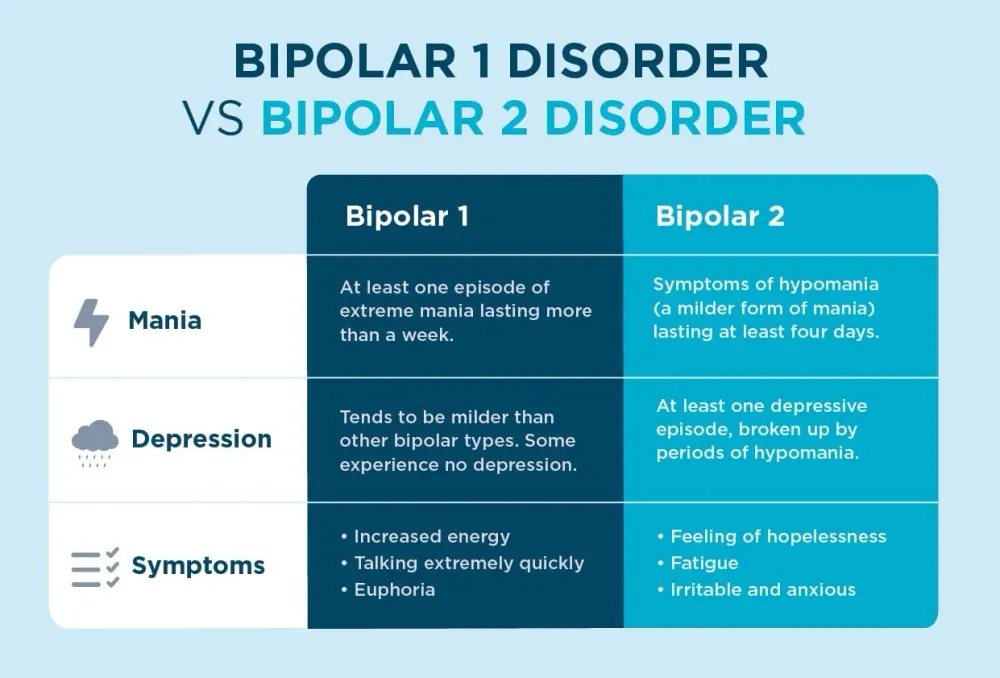
Bipolar 1 Vs Bipolar 2 Disorder
" It’s important to note that not everyone with bipolar disorder will experience all of these symptoms, and the severity of symptoms can vary from person to person. "
If you are concerned that you or someone you know may have bipolar disorder, it is important to seek professional help from a mental health professional. Early diagnosis and treatment can make a significant difference in managing the symptoms and improving quality of life.