
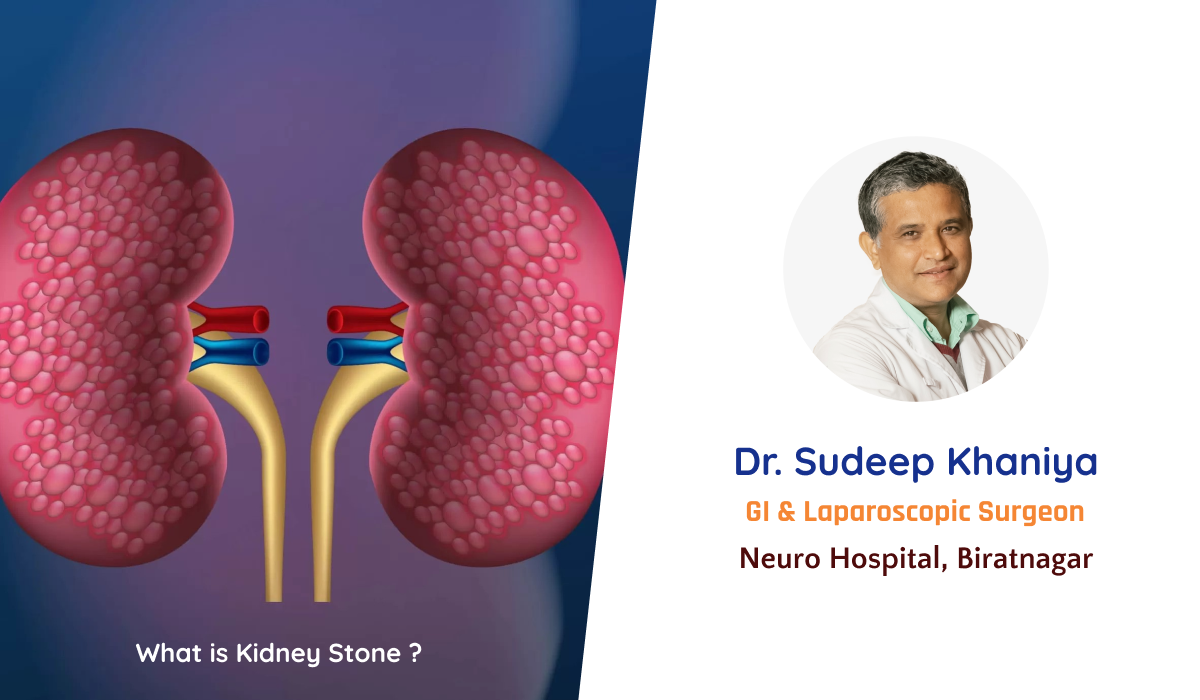
What is Kidney Stone ?
Kidney Stones • Apr 17, 2024
Kidney stones are a common and painful condition that can affect anyone, but with the right knowledge and habits, you can lower your risk and manage them effectively. Let's dive into what kidney stones are, their symptoms, prevention tips, treatment options, and other important information in simple language.
Imagine tiny, hard pebbles forming inside your kidneys. That's what kidney stones are – solid masses made up of minerals and salts that can develop when your urine becomes too concentrated. They can vary in size, from as small as a grain of sand to as large as a golf ball, and they can cause a lot of discomfort if they start moving around.
Types of kidney stones
Kidney stones come in a variety of sizes, shapes and colour. Some are like grains of sand, while in rare cases others can grow to the size of a golf ball.
The main types of kidney stones are:
What are the symptoms of kidney stones?
At first you may have no symptoms from a kidney stone.
Later you may notice pain as the stone moves from your kidney into your bladder or when you pass urine.
The kidney stone could cause a blockage in your urinary system.
You might feel a gripping pain in your back, side, lower belly or groin. This pain is called renal colic. The pain of kidney stones can be severe and lead to you feeling sick or vomiting.
If you have kidney stones, you may also:
If the pain is very severe you should see a doctor or go to your nearest emergency department.
What causes kidney stones?
Kidney stones form when minerals and salts in urine crystallize and stick together to form solid masses. Here is a concise summary of the main causes of kidney stones:
Conditions like hypercalciuria (excessive urinary calcium), hyperuricosuria (high uric acid in urine), and gout increase stone risk.
Digestive diseases or surgeries that affect calcium absorption can contribute to stone formation.
Genetics and Family History: Some individuals are genetically predisposed to kidney stones.
Lifestyle Factors: Obesity and sedentary lifestyle increase the risk of metabolic imbalances leading to stone formation.
Medical Treatments and Medications: Certain medications, such as diuretics and excessive calcium or vitamin D supplements, can promote stone formation.
Prevention of Kidney Stones
The good news is that there are steps you can take to reduce your risk of getting kidney stones:
How are kidney stones diagnosed ?
Healthcare providers use imaging, blood and urine (pee) tests to diagnose kidney stones. If your provider suspects you have a kidney stone based on your symptoms and physical exam, you may need one or more of these tests:
Treatment of Kidney Stones
If you do get kidney stones, there are ways to treat them depending on their size and location:
Other Useful Information
Conclusion
In Conclusion, Kidney stones can be painful and disruptive, but by making some changes to your lifestyle and getting the right treatment when needed, you can manage them effectively. Don't hesitate to talk to your doctor if you have any concerns about kidney stones – they're here to help you stay healthy and pain-free.